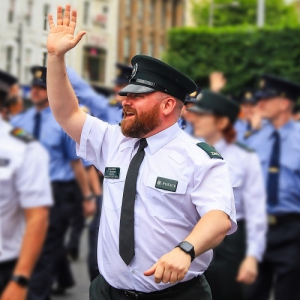
Blog | LGBT History Month 2022 – PC Al Smith

I grew up in rural Devon during the introduction of Section 28 and remember the anti-gay tabloid headlines very well. I realised I was gay when I was 11 and was bullied throughout my time at school for being different. Unsurprisingly, I didn’t feel able to ‘come out’ until I’d escaped to university. I was very fortunate my family were supportive of me at the time and have always continued to be so.

I followed in my father’s footsteps and joined the police in 1998 – it was a way of helping others and enjoying a varied, challenging career. I ended up joining West Midlands Police because it was one of the few forces at the time that included sexual orientation in its equal opportunity statement. At the time I identified as a gay woman and I wanted to know the force would have my back if I was bullied again for being me.

My self-awareness has developed since I joined the police and I now identify as trans, non-binary and describe my sexuality as pansexual. I started my transition almost 15 years ago, back in 2007, at the age of 35. I started with private top surgery to deal with my greatest source of gender dysphoria. I told myself I was unsure about starting cross-sex hormones because it would limit my opportunities to compete in sport. However, I very quickly realised I wasn’t being honest with myself and I definitely wanted to start hormones and assess if they would help my wellbeing going forward. Getting access to them proved to be very difficult because I made no secret of the fact I identified as non-binary. The local endocrinologist I saw said I didn’t fit the prescribing criteria and suggested I obtain some steroids from the gym where I trained – an interesting demonstration of his ‘duty of care’ to me! Also not the most sensible suggestion to someone he knew was a serving Police Officer, was he trying to jeopardise my career and my health… I then endured two years of travelling up to Sheffield Gender Identity Clinic every three months to have the same conversation over and over again. The lead clinician was cautious about providing hormones in case I changed my mind – despite the fact I was ecstatic with how much better I felt after the top surgery. However, one visit I struck lucky and saw a locum doctor who was prepared to write me a prescription and I’ve never looked back. Transitioning is by far the best thing I’ve ever done for myself. I think I’m extremely fortunate to transition when I did as my initial transition only took two years. The current waiting time for just a first appointment at a GIC is anywhere between 3 to 51/2 years, which is a very long time to be left in limbo.

I’m currently the trans lead for the National LGBT+ Police Network. I helped shape the 2012 PACE guidance on searching trans detainees according to their lived gender, as well as the recently revised guidance on searching by trans and non-binary colleagues. Progress has been much slower than I thought it would be, but a long period of austerity has meant the service’s priorities have been focused elsewhere. The Police Uplift Programme offers a great opportunity for the service to introduce ‘best practice’ recruiting processes across all 43 forces of England & Wales. Historically, the service has expected each force to deliver LGBT+ equality and inclusion through using third party, equality frameworks such as Stonewall’s Workplace Equality Index.  I think the next step is to coordinate improvements by creating a nationally owned LGBT+ action plan, as exists for Race and Gender for example. Through collaborating with partners and the wider LGBT+ community we can transparently demonstrate and communicate progress, which will help build trust and confidence and deliver improved LGBT+ inclusion in the service we offer the public and career we offer colleagues.

In my day job I’m currently a Force Intelligence Officer, a role I’ve thoroughly enjoyed for over 15 years. I describe my job as supporting my colleagues to work smarter to deliver proactive policing. Every day offers a new challenge, needing me to be creative and a problem solver. I’ve worked with teams tackling organised crime groups involved in drug supply and the use of firearms, high risk sex offenders, as well as assisting in those investigating live kidnaps, as well as domestic and child murders. I’m currently part of our Serious & Organised Crime Unit tackling violent gangs who exploit others, for instance through county lines drug dealing. I count myself as being extremely fortunate in being able to truly be the very best I can be, in a job I absolutely love!

My advice to any LGB&T+ individual living through what feels like a trans version of S.28 is don’t waste your time and energy on the haters. Focus on what you can control and enjoying your life – life is much more enjoyable if you do this! Connect with like-minded people, be that LGBT+ role models or anyone whose values and actions you admire. Help support each other in whatever your seeking to achieve. We’re all stronger together J

Written by PC Al Smith, West Midlands Police Intelligence Officer & Trans Lead for the National LGBT+ Police Network
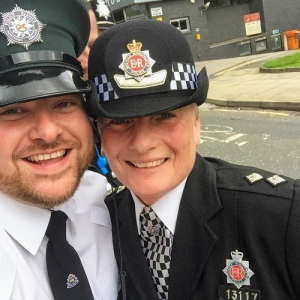
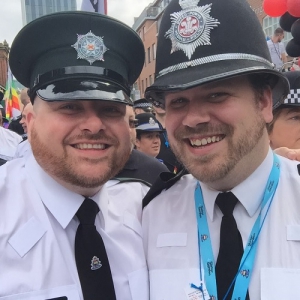
Blog | LGBT History Month 2022 – PC Adrian Tyson

My career in Cumbria police started in 1997 as a crime inputter before joining as a police officer in 1999 (seems a lifetime ago). I’d been surrounded by the police environment all of my life with my dad having been a police officer and I was lucky to work with him for the last 2 years of his policing career.

A couple of weeks before I went for my police interview I was on a night out with some friends in a local nightclub when two lads who I knew from secondary school approached me, they continued with their hate insults which I had been subjected to throughout school and started to assault me, resulting in me having a dislocated jaw. As I left in an ambulance to go to the hospital I saw my dad and his shift running to what I later found out was a report of a male being assaulted, ME. a couple of weeks later I went off to police headquarters for my weekend assessment centre, my confidence had been destroyed and I was asked to go back and try again.  All I could think about was how two individuals had ruined my chance of a career in the police because of their hate for someone who was gay. The thing was, I wasn’t open about my sexuality back then so they didn’t know anything but had made assumptions. I went back to another assessment centre and was offered a job as a police officer.

The start to my career wasn’t the best and when I look back I can see how the canteen culture and microaggressions against the LGBT+ community were there, it was like my school days.  I did think about leaving the police to stop people talking about me and questioning my sexuality but that little voice was saying to me “Tys, be yourself”, I told a close work colleague and lifelong friend that I was gay and it went from there.

23 years later in my career and  I’m now the Chair of the Cumbria Police Pride Network, it gives me so much personal satisfaction and pride in being the person who supports their colleagues, representing the force as someone who stands up and is proud to talk about being gay in the police.  People still ask “why do you need to keep going on about it, everyone is equal aren’t they”, my response is, if we don’t talk about things, if we don’t recognise what has previously taken place, good and bad, then the underrepresented could be at risk of being silenced and forgotten.

Being able to be your authentic self, both in the workplace and in home life makes that person happy, safe and valued. I hope anyone reading this can see that we all have our different journeys in life, I hope others don’t have to experience the verbal abuse and the violent assaults like I did,  all because someone takes it upon themselves to show their hatred and in a lot of cases, lack of understanding.  This is why I do what I do, to make sure that person is heard and the community is safe. I have been lucky to have met some amazing people, some of you will have already read their blogs,  they are inspirational and kind people.

I guess what I could have said in a few words is, be kind, be yourself and remember we are always here for you.

Written by Police Constable Adrian Tyson, Cumbria Police Pride Network Chair

Blog | LGBT History Month 2022 – PC Steph Lawrence

This is the first blog I’ve shared about me. As usual I wasn’t going to take part, but then I felt inspired by others on our national team to do so. Bizarrely I actually feel quite nervous doing this.

Starting Out:

From a very young age I knew I was different, I preferred the company and activities of boys, I couldn’t really identify with other girls and their interests. I preferred to wear trousers and jeans and resented being made to wear skirts, or look girly. I wanted to be who I really was and express myself in a way in which I felt truly comfortable with. This mindset has never changed over the years and remains a core part of my identity.

I became aware that I had same sex attraction in my early teens and started to become interested in other girls. I had an older gay brother, 5 years my senior, so being around LGBT+ people when I was growing up was pretty much the norm. That exposure and support from people of difference helped me to become and realise the person I am today. I wouldn’t say it was a foregone conclusion, I did try a couple of relationships with men, both of whom I still remain in contact with today, but following on from this I knew for sure this wasn’t who I really was, and that’s okay.

I am a 70’s baby, so growing up and schooling took place during the 1980’s. This was a very trying era, particularly for LGBT+ youth, the discrimination of that time was beyond terrible. Everywhere you looked there was homophobia and wider discrimination. Limited rights and lack of equality on many different fronts, politicians and religious leaders declaring that we were not to be seen as normal, discussed or promoted in any way. Regrettably the police played a hand in this also, not part of the Peelian Principles, or policing by consent model we know now – we must own this! Generally it was an ugly, depressing time to grow up in and our gay men often took the greatest hit. Section 28 came into law during my late secondary school years. This caused huge damage to many young people, however that discrimination caused a fire in me which has been burning ever since. I simply won’t put up with this type of nonsense, I’m very much like Teflon to it and I really have seen and heard it all before, on repeat. We simply won’t be erased, we belong too!

Fast forward to recent times: 

Contrary to popular perception [Inserts Laughter] I’ve only had a few relationships with women, I’m generally very outgoing, but when it came to women I was rather nervous and unsure of myself. Sadly two out of three of those relationships were an absolute disaster and I was ‘cheated’ on, or lied to. This left me feeling undeserving of finding anyone remotely decent and knocked my confidence significantly. I resorted to throwing all my energy into work and my beloved dog as a trusted companion, at one stage distancing myself from any relationships for almost a decade!

This was the only time in my life I wished I wasn’t gay and that I could change it. Good news, I did eventually find my soul mate and we have been happily together for ten years. We share our own home in a beautiful part of the south west and we are bringing up our ‘fur daughter’ (a re-homed miniature schnauzer) who’s completely adorable and crazy.

Career-wise I’m now in my 16th year of policing. I was open about my sexuality from the very moment I joined. I remain unsure to this day whether or not that was initially a good thing, but then I could never be someone that I’m not. I have always championed LGBT+ equality in various organisations and took an active role in staff support associations. I am the chair of our internal LGBT+ Network (supported by a sergeant and PCSO as vice chairs) and I’m also the deputy chair of our regional LGBT+ Network, it keeps me busy and grounded. I currently work as a Hate Crime coordinator in my constabulary, I literally live, sleep and breathe what I do.

Being ‘out’ and championing these issues can really take its toll and can become quite tiring, particularly when you’re up against cynicism, criticism and toxicity, almost as though you’re making a fuss over nothing and looking for preferential treatment. [See social media for examples]. This of course is not the case and most people tend to champion this work with lived/ally experience and a genuine desire to improve the lives of others.

A part of me wishes I could just carry on and not have to keep talking about my sexual orientation at work, realistically we should already be there, but if we stop, I tend to see LGBT+ inclusion going backwards. I simply cannot allow that to happen, for the most obvious of reasons. I feel inspired every single day by my national colleagues, there is a real bravery in being ‘out’, not everyone agrees with our identities and the way in which we promote inclusion. We have some wonderful people who really do go the extra mile to ensure policing is as representative and supportive of LGBT+ people as it can be, I make up a very small part of this much larger effort.

I know and fully understand the importance of seeing visible LGBT+ role models in society and within policing, that’s why I do it. Every single day I work hard and strive to be the person I wish I had to turn to when I first joined the police. I offer a genuine, supportive hand of friendship to those who struggle to be themselves, want support over a wide range of different issues, and endeavour to lead/advise my organisation in the right way when it comes to LGBT+ , and/or other equality matters. This in turn should hopefully improve our service to the public. Let’s face it, if we can’t look after each other, what hope have we got to even begin to look after wider society and keep them safe from harm.

My sincere wish is that I am making a difference to people. I am so very proud to serve the public, but even prouder to serve them as an openly gay female police officer.

Steph. 💙


Written by Police Constable Steph Lawrence, Gloucestershire Police LGBT+ Network Chair

Blog | LGBT History Month 2022 – PC Amy Tapping

At school I knew I wasn’t like the others; I didn’t want a boyfriend, I loved playing sports and climbing trees, I was awesome on a bucking bronco! My mother getting me to wear a dress always resulted in an argument and me sulking for the day – it didn’t stop me riding the bucking bronco either.

I hated having to wear a skirt to school, I also knew that if I said I liked girls it would have resulted in bullying and a much more unpleasant time for me. Going to college I remember there being an LGBT+ awareness event, but I was worried that if I was seen there people would say stuff so I just popped my head in for 5 minutes just so I could see what it was like; at that point the female speaker was being challenged for wearing a tie so I decided it was best for me to leave.

University gave me the opportunity to be myself, I naturally became part of the group that identified as LGBT+, suddenly I felt I’d found my people. I could be me without worrying. My confidence in myself grew in all aspects. Although having just found girls the academic part of my life didn’t go so well.

The impact of the rainbow flag, however small, became really important to me. It meant the pub or club I went to was a safe space. I could hold the hand of my girlfriend without fear or feeling uncomfortable. All the toilets were effectively gender neutral – no one cared and as usual there was always a queue at the ladies. When one of the pubs I went to brought in gender neutral toilets (20 years ago) it wasn’t a big thing, people just went to the loo.

On joining the police I chose not to talk about my partner when I went to my first posting, but I soon realised no one really cared. I joined the LGBT+ Network in Thames Valley Police but never really got involved. On transferring to Northumbria Police to live with my girlfriend, I put my name forward to be part of the LGBT+ Network, but it soon closed down as it wasn’t seen as necessary.

I was asked to assist with Northumbria’s participation at Northern Pride. This led me to feel there was a need for a staff support association and network especially after attending a National LGBT+ Police meeting which encouraged a need for a local LGBT+ police network. I formed a small committee, the first year there were only four of us. I was Chair and moved on to have a Co-chair of different gender identity. The Network has grown and supported the founding of other staff associations within the organisation.

I moved on to the Regional Representative position, attending the quarterly National Network meetings and at the end of my predecessors term as Co-Chair, I put myself forward and was elected National Co-Chair. I had always been passionate that policing does not support LGBT+ victims of domestic violence adequately and having been banging this drum for a while, with the support of an Australian colleague who had also felt the same, I launched LGBT+ Domestic Abuse Awareness Day on 28th May 2021 in the UK.

I was recently a finalist as positive LGBT+ Role Model in the National Diversity Awards, it was an amazing evening meeting so many fantastic people. The event invigorated and inspired me as I have so much more I want to achieve to make a difference for LGBT+ staff, officers and victims of crime. I’ll start with gender neutral toilets!

Written by Police Constable Amy Tapping, Co-Chair of the National LGBT+ Police Network.

You can find more information about PC Tapping in the ‘Our Leaders’ area here.

Blog | The moment it all changed for me – PC Paul Bloomer

I joined the Police Service of Northern Ireland in 2010, and at the same time joined the Gay Police Association NI, (GPA). I went to few meetings, and in 2014 took a spot on the committee, mainly because no one else would. I never felt like the association was out to drive change or that it was truly inclusive, there were no women on the committee, no Bi people, no trans or non-binary people, it was more like a luncheon club for gay men. Meetings were held in people’s houses not in Police stations, there was a feeling of cynicism regarding what the association could achieve. I knew that it had once stood for something but the people who had been passionate about driving positive change had all either burned out or left. There were still good people in the GPA-NI but motivation and energy was so low. The UK National GPA collapsed in 2014, after years of poor management. However, the GPA in Northern Ireland limped on.

I remember a flurry of emails coming in throughout 2015 about forming a new UK wide network of Police LGBT+ staff associations. I never engaged, “what’s the point”, I thought. I was cajoled into attending the launch of the new network in Manchester on the 28th August 2015, it coincided with Manchester Pride, “at least I’ll get to see my mates in Manchester” I was thinking.

I remember turning up at the conference venue, the first thing I saw was a Police car done up in a Rainbow livery, I had never seen this before and I thought it was wonderful. I got inside and the venue was bedecked in Rainbow flags and Sillitoe tartan, there were Police from all across the country. I got talking to those officers and I could feel the passion and excitement in them about their jobs and staff networks, I had never seen Police officers like this before. I’ll never forget meeting Inspector Jacqui Prest, her energy and passion about Police being in Pride and the power of staff networks to support and empower people completely captured me. She handed me a set of rainbow epaulettes, which now are in the Police Museum at PSNI Headquarters. I had never seen items of Rainbow Police uniform before, I was blown away. I listened to speeches throughout the day, hearing the care and passion from people like Tracy O’Hara, talk about supporting and empowering LGBT+ officers and staff. At the front of the stage were massive letters spelling out ‘POLICE WITH PRIDE’. I started to get an idea what was going on elsewhere, I heard stories about how empowered LGBT+ officers were making a difference in their organisations, how they were driving positive change for staff inside policing and delivering better outcomes for their communities. I saw people who were not just ‘ok’ with being ‘out at work’ but were positively beaming with empowerment and passion for their jobs, serving our communities with pride. I heard talks about how being your authentic self in work empowered people, and that empowered people who were supported in their workplaces were less likely to suffer from stress, less likely to go sick and more likely to perform better. Later that day there was a break, representatives from LGBT+ charities and community groups were there, I talked to them about how they were engaging with Police, which was totally different to what we were doing. One of the community members saw the rainbow epaulettes I had been clutching and told me how they loved seeing Police wear them, and how seeing Police make that gesture made them feel safer around police. I left the conference, my head was buzzing, racing with thoughts. I felt everything from excitement and empowerment to regret and shame at my own cynicism.

The following day we met at the same venue, this time we were going to march in Manchester Pride in uniform. We had obtained permission from our Deputy Chief Constable to do so, but at the time it never dawned on me the significance of it, we would be the first ever Police Service of Northern Ireland officers to march in a Pride Parade in uniform. As we paraded through the city, people were cheering their Police. I had never experienced anything like this, I’ve been spat on, beaten, abused and demeaned while wearing police uniform but never celebrated or cheered. A saw a woman in the crowd toward the end of the march, she locked eyes with me and started to cry. I went over and spoke to her, she told me her story, she was from Northern Ireland, she had left because she had been rejected by her family for being a Lesbian and felt that she could never be herself in NI, as it was too hostile for LGBT+ people. She told me that she grew up in a Police family, but none of her family had anything to do with her because of her sexuality. She came to Manchester looking for acceptance and community. She told me seeing the green PSNI uniform in a pride parade affected her deeply and made her feel that some positive change was possible at home, that maybe people like us were accepted.

That conference, the parade and the interaction with that person profoundly changed me. A fire had been lit inside me that still burns today. I felt empowered and transformed. My whole perception of what my uniform meant to me shifted from it being just ‘work clothes’ to being something truly special and meaningful. I had an energy and passion that wasn’t there before. I knew if I wanted there to be positive change back home, the first thing that had to change was me. I wanted my colleagues to feel the empowerment and pride I did. The two other colleagues that were with me were also greatly energised by the experience, however both left the police through retirement within a couple of years.

In the seven years since that fateful weekend, I have worked hard along with others, like my amazing Co-Chair Beth, to help bring about positive change in my own Police Service. We reformed the GPA, which had 38 members into a modern inclusive LGBT+ staff network with now over 500 members, many of whom are allies, I’m so proud more of my colleagues are able to be their authentic selves at work. The PSNI now marches in Pride in uniform, every year, as part of our regular business. Recruitment from LGBT+ people has dramatically increased. We were once a Police Service where you were told to, conform, assimilate, “be the grey man” and “dry your eyes”. We are now an organisation with a people strategy which states, “Our ambition is greater than being representative alone; it extends to being an inclusive organisation where everyone feels welcome, are treated with dignity and valued as their authentic selves, and are confident to share their perspectives and ideas.” I’m so proud of the progress we’ve made in Police Service NI and as a staff network. I’m proud to have played a small part in it. I’ll never forget, that journey started with being handed a set of rainbow epaulettes in Manchester. I’ve come a long way since then, I’ve changed a lot.

I will continue to walk in Pride. I will continue to be visible as an empowered Queer Police officer to show everyone that you can be LGBTQIA+ in the Police and that being different isn’t a curse, it’s a gift. I do it to show our community and other marginalised communities that society’s institutions like the Police belong to them, as much as they do to any other section of society and that we as LGBT+ people have every right to take our place in those institutions, because institutions that are representative and reflective do a better job serving and protecting all those in society. I’ll continue do it because somewhere, there is a young person who hates themselves because they are struggling with their sexuality or gender identity. To anyone like that who is reading this please know, you are who you are meant to be, there is nothing wrong with you. Let no one else define who you are. Let no one put you down. The best thing in life you can be is the truest version of your authentic self. Being true to yourself makes you shine and when you shine, that light can be a guide for others to follow. You are meant to be seen, you are meant to celebrated. Be proud of who you are.


Written by Police Constable Paul Bloomer, Co-Chair of the Police Service NI LGBT+ Network, Regional Representative and National Comms Lead.

You can find more information about PC Bloomer in the ‘Our Role Models’ area here

Blog | LGBT History Month 2022 – DCC Vanessa Jardine

If you had told me 27 years ago when I joined the police that one day I would be writing about being gay, I would have recoiled in horror.

I was always a tomboy, one of my earliest memories is playing football with my best friend, me in my beloved Manchester City kit and Brian in his Manchester United kit. If we weren’t playing football we were racing around on our bikes. At that time in primary school I was every bit as good as the boys and wanted to play on the boys football team, (nothing like a girls team existed then). I realised how separate the sexes were when my teacher said I could only continue to play football if I played netball for her team. Well netball was rubbish in my eyes, what kind of game was it where when you get the ball you had to stand still? I then went to an all girls school which took me away from football and this was not easy at all.

I always knew I was different to many of my friends but didn’t know what to do to be my true self. There was little on television at that time, no internet to research and I felt very alone for a long time. Throughout university I didn’t let myself ‘go’ and struggled to be myself which meant I was unhappy for a lot of the time. I did eventually meet someone during a summer job who I talked to about the way I felt and we started to go out into the gay village in Manchester, but I was painfully shy.

When I started in the police I met someone and started a relationship. I now recognise that it was extremely cruel when this person said that we could not continue seeing each other unless I came out to my parents. It’s strange what you will do sometimes but I did what she asked. I can remember the occasion like it was yesterday, my mum was pegging the washing out when I told her. The first thing she said was ‘is it something that me and your dad have done’. Fast forward and my parents have been the most supportive understanding people you could ever wish for. It wasn’t something they expected as they had never known any gay people. Now they come to Pride to support me marching in uniform, love all my friends and couldn’t be prouder.

I spent a long time being so far in the closet I was practically out of the other side. I would look longingly at people in the police who were out and could be themselves. Now all that has changed, I try every single day to make the police service as inclusive a place that it can possibly be. Everyone should be able to be their true selves at work. They deserve to be relaxed, happy and feel confident being themselves. People need to be kind, not judge and recognise that people love in different ways. It can feel like I have to ‘come out’ nearly every day in one way or another and that can be exhausting. It’s very important though that those of us that do feel we can be out, that we make every day a day where someone else can be their true selves. People deserve to be happy and together we can make a difference.


Written by Deputy Chief Constable Vanessa Jardine, NPCC Lead for LGBT+

You can find more information about DCC Jardine in the NPCC Portfolio area here.

Blog | LGBT History Month 2022 – PS Louise Beale

I am in the final few months of my full time role as General Secretary of the Scottish LGBTI Police Association, a full time role within Police Scotland. I have been a police officer for just over 15 years, starting my policing career in West Yorkshire Police and very much in the closet. It was challenging to hide who I was, and without a doubt played a part in feelings of isolation and difficulties in the start of my policing career.

In 2012 I transferred from Leeds to West Lothian, Scotland. Moving from a large multi-cultural city to an economically depressed old mining town, this was a shock to the system to say the least. It also presented an opportunity for me to be my authentic self. From then on, I was, for the most part “out” at work.

It wasn’t until 2018 that I had any involvement with the then Gay Police Association, where after I was nominated by a colleague (and not present at the vote) I was elected “The Women’s Rep”. This was in no small part because, the GPA didn’t have any female representation. At all. I went to a couple of committee meetings but didn’t really have any idea what was going on.

In 2019 through a mixture of lack of alternatives, my current position and timing, I took on the General Secretary role. It was never in my plan of things to do, or career aspirations, so much so, initially I turned down the role. It wasn’t “policing” and what on earth did I know about running a Diversity Staff Association? It wasn’t that long ago I was issuing tickets to drunk people in Bathgate for peeing in the street…

I clearly remember being sat in meetings with very senior officers, not a clue what any of them were talking about, no idea how to write a suitable Briefing Paper and a total sense of horror at the mammoth task ahead of me. Where to even start?

With the exception of 2 people the entire exec committee had quit. I felt a massive sense of responsibility to make things better, if I could, bit by bit and one day at a time. It was often a thankless task and felt not dissimilar, to hitting my head off a brick wall. Frequently. This role has without doubt been the steepest learning curve I have ever had, testing me in ways I never thought possible.

Upon reflection, there have been many successes over the past two and a bit years, although not always apparent at the time. The Association now has a full committee, divisional reps in nearly every geographical division in Scotland; an increase of almost 700% in membership. The introduction of Gender Neutral Hats in Police Scotland, is probably the most visible change, and something we worked on for a long time. Other less visible but perhaps more impactful developments have included the launching of the UK policing’s first LGBT+ reverse mentoring scheme, and putting on a series of events, activities and conferences.

The most important measure of success however has been the legacy. The team that has been built, the stories that have been heard, and the positive changes that have taken place. The Association has gone from strength to strength and I fully expect this to continue under the new General Secretary. Diversity Staff Associations/Networks are an often under-appreciated and under-utilised resource within Policing, if you are reading this and have a network within your force area why not reach out and get in touch? You might be surprised at what you can get involved in and what positive change you can effect in your force. Thank you to everyone who has been part of this journey.


Written by Police Sergeant Louise Beale, General Secretary of the Scottish LGBTI Police Association.

Blog | Introduction of Network Co-Chair – Chief Inspector Lee Broadstock

On Wednesday 11th January 2022 the National LGBT+ Police Network held an NCG (National Coordination Group) meeting with the addition of an Extraordinary General Meeting (EGM). The EGM being required due to National LGBT+ Police Network Co-Chair Clint Blackburn providing his intention to stand down effective from the December 2021 NCG meeting.

During the EGM, votes were cast by the Regional Representatives on behalf of the LGBT+ Networks that they represent, and Chief Inspector Lee Broadstock of Greater Manchester Police was successful. Lee says:

I was very pleased and proud to have been elected as the new Co-Chair, taking over from Clint. It really is a huge honour to hold the position and to work alongside Amy Tapping, who remains in her first tenure as Co-Chair.

For those that don’t know me, I would like to take this opportunity to introduce myself:

I am currently an operational Chief Inspector on a busy district in Greater Manchester Police and I have been on the executive committee as either chair or co-chair of GMP’s Pride Network since 2011, so a significant time, and I’m really proud of the achievements and developments made by GMP Pride Network over the past 10 years. Prior to COVID19, Manchester Pride was really well represented by Police participants from across the UK and beyond, and at the Pride Parade in August 2014 the world’s first rainbow liveried police vehicle was launched. It has been amazing to see this idea replicated across the UK and across the globe.

From the connections made at Manchester Pride, the idea for a new National LGBT+ Network was formed and here we are now with what is recognised by the NPCC, College of Policing and other notable stakeholders as the most engaged and impactive staff network in Policing, everyone who has been involved with the National, at Regional level and at a force/agency level should be really proud of this achievement, I know that I am.

With this recognition comes a sense of responsibility that I now share with Amy, and at the NCG meeting, both Amy and I noted how challenging the current climate is and how challenging the next few years will be for LGBT+ policing, but collectively we will meet the challenges and will make Policing UK a better place for our LGBT+ colleagues and for the LGBT+ community. How could we fail with the amazing people we have in our Networks.

I plan for this to be the first of a series of blogs from myself and Amy and also the rest of the NCG team, as the Network is a team, a fantastic and inspiring team.

I would also like to welcome PC Dan Low from Sussex as the new secretary of the Network, taking on my previous role. It was stated that Dan has big shoes to fill, to which I must point out Dan has bigger shoes than me, so he will prove to be excellent as your new secretary.

I cannot end without paying thanks to Clint Blackburn. Clint has been a great Co-Chair and leader and I know he is not far away for advice and guidance. Also thanks to Tracy O’Hara, Lou Provart and Peter Rigby, the previous Co-Chairs who have all played vital parts in making this network what it is today.

And finally, thanks to our outgoing NPCC LGBT+ lead – now retired DCC Julie Cooke. Julie was the most incredible lead and ally for us, and is now a friend to many of us. We are all looking forward to getting to know our new NPCC LGBT+ lead DCC Vanessa Jardine and welcome her into her new role.

Best wishes to you all and enjoy LGBT+ history month 2022 and all of this years upcoming community events

Lee

Blog | LGBT History Month – PC Ashley Toner-Maxwell

PC Ashley Toner-Maxwell – Police Scotland

As a child I absolutely loved sports. I grew up skateboarding and playing football with the boys. So it was a real shame I missed out on so much PE in high school. While the boys played rugby or football outdoors, I spent some PE lessons alone in the changing rooms. Back in the early 2000s it was commonplace for high schools in Scotland to have strictly gendered PE classes. The girls were expected to dance and dancing made me feel incredibly uncomfortable. It still does! It felt like such an injustice. I was 13, and I was being denied doing activities I enjoyed purely because of my gender.

I felt a similar feeling of injustice and confusion when I joined Strathclyde Police as a Special Constable in 2010. I distinctly remember being issued my uniform in a large games hall with the rest of my mostly male cohort. I couldn’t understand why the women were issued cravats and bowler style hats and the men were issued ties and peaked cap style hats. Why, I thought, did the organisation not get rid of the bowler hats and cravats back in the 70s when the skirts, handbags and smaller batons were deemed sexist? It felt repressive. It didn’t cross my mind at that time that there might have been someone in the room who didn’t identify as exclusively male or female. It wouldn’t be until much later in my career I’d recognise the implications of gendered headwear for my non-binary colleagues.

I joined the regular constabulary in 2011 and as I progressed through my first few years, I began to feel increasingly uncomfortable wearing my bowler hat. To me, it reinforced gender stereotypes, made an unnecessary distinction between male and female officers and most significantly, presented a real problem for my non-binary colleagues. I belonged to an organisation committed to positive action and inclusivity yet the unavailability of a gender neutral hat did not align with its values of fairness, integrity and respect.

It wasn’t until 2017 I finally acquired a police baseball cap. At the time it was only worn by public order, firearms and a small number of other specialist officers regardless of their gender. I started to wear it routinely on shift instead of my bowler hat which I promised myself I’d never wear again in support of my non-binary colleagues. I was challenged several times by supervisors as at that time the baseball cap wasn’t compliant with the uniform standards of a response officer. I viewed every confrontation as an opportunity to explain the detrimental impact the current uniform policy was having on some of my colleagues.

In 2018 I took my concerns to the Scottish LGBTI Police Association. I felt heard, validated and empowered to be involved in making a change. I had been a member of the Association since I joined the police but had never been actively involved. It was at this point I decided to join the committee and take on the role of Welfare & Wellbeing rep.

The Scottish LGBTI Police Association, in acknowledgement that gendered headwear directly affected some of its members, worked tirelessly for change at every available opportunity.

On the 28th of August 2019 Police Scotland published a memo granting permission for all officers to wear gender neutral headwear (in the form of the police baseball cap) should they wish to do so. Although an interim solution, I felt delighted and relieved by the news. This was one of the biggest changes to uniform policy in many years. The Scottish LGBTI Police Association are now focusing efforts on the move to one single, gender neutral style of hat for all.

This experience taught me the importance of being persistent, the influence of staff associations and the power in always standing up for what you believe in. I now feel very comfortable in my uniform in the knowledge that Police Scotland understands and respects the importance of gender identity and expression for LGBT+ staff.


                    “If you are neutral in situations of injustice you have chosen the side of the oppressor.”

                                                                                                                                                         Desmond Tutu

Blog | My Coming Out Story – Supt Paul Court

My Coming Out Story…

“In coming out, I want to be the person I was born. I want to be able to enjoy my successes without having the issue hanging over me. I want to be able to find somebody to share my life with”

This is an extract from my coming out letter. It took me four years to draft. At the time I wrote:

“I have thought about telling you all at some point but the occasion never feels right. And when it does, I worry about the reaction that I will get. So I have written what I need to say in a letter. It’s probably the wimp’s way out. That said, writing this letter is the hardest thing I have ever had to do”.

I never did send the letter but instead I shared it in person with Joanne, my sister, shortly after having nearly been found out one evening in March 2011 when my mum came to my house unexpectedly to tell me about the death of my grandad. A frantic panic ensued as I attempted to hide the secret boyfriend whilst my mum stood outside (my contingency plans hadn’t considered the ‘death message’ scenario!) Needless to say, the kerfuffle then prompted some inquisitive questions from the family. In the nine months that followed, I would share the letter with each family member one at a time. Each time was as equally traumatic as the previous, albeit it never needed to be.

When I share my coming out story with others, I usually get asked the same curious questions and so I thought I would try to answer these questions using direct extracts from my coming out letter:

When did you know you were gay?

“I have known since high school and I have done everything I can to change. I have thought about how I can get rid of this secret every day for the last ten years”.
Why didn’t you come out earlier?

“The main reason is that until now, I haven’t been able to accept who I am. I’ve hoped it will go away and that I will meet a girl (I’ve tried that and it didn’t work!) I also haven’t told you because I worry about the consequences of people knowing I’m gay, both in my private life and in my work life. I’m not expecting that everyone is going to take this well. I accept that I may have fewer friends than I started with. I am accepting that I am likely to be subject to abuse, prejudice, discrimination and people talking behind my back. I am accepting that I will forever have to correct people about the assumptions they make. I am accepting that I may lose people close to me who can’t accept me for who I am. I am accepting that I may hurt people when they find out I have been dishonest with them.”

So what happened when you came out?

“I hope everyone who reads this letter feels they are able to speak to me openly about my sexuality. I hope that I will have the same support from my family and friends that I have always had. I hope that my friends still want to be my friends because they like me for who I am. I hope my family can still feel proud of what I have achieved and will go
on to achieve. I hope you have the strength and courage to be able to tell people I am gay without shame and to defend me from those who mock. I hope I will have your discretion and support.”

The good news is that all my hopes were realised. My family, friends and colleagues without exception, provided unwavering support. But whilst I have told you about how I first came out, coming out isn’t a single event. And it doesn’t always happen on your own terms, for instance when the Command Team secretary read my vetting form without my knowledge and found out I was gay before any of my family. Or when I was homophobically assaulted in the city centre which effectively outed me to the whole organisation (the offender received six months imprisonment). Or the many occasions when I am asked about my wife and have to correct people (or sometimes not if I feel too awkward doing so). And whilst it does get easier, each time is stressful and each time requires a quick decision as to whether it is safe.

So, what can we do to help? Well from my own experiences, there are a few simple things we could all commit to on National Coming Out Day to help others:

  1. If your colleague avoids talking about their weekends or time off, be sensitive to the fact that there may be a reason for that.
  2. Consider your use of language when asking about someone’s partner so as to avoid assuming their gender. It is the most common cause of my repeated ’coming out’.
  3. At the point someone comes out to you, know that they may be at their most vulnerable and it may have taken them years to build up the courage to say those words to you. Be kind, be compassionate, be sensitive. It is a huge compliment that they trust you.
  4. Challenge processes within your force that may out people e.g. vetting forms being passed to line managers rather than direct to the force vetting unit. In doing so you are helping those who can’t speak up for fear of outing themselves.

These simple things will undoubtedly make life a little easier for those who aren’t out. As I sign off, I wanted to finish with a final last extract from my letter:

“No matter how scared I feel at the moment at the consequences of sending this letter, I feel like the biggest burden has been lifted from my shoulders”

Whilst coming out was the hardest thing I have done, it was the best decision I made in lifting the biggest burden. Thought it wasn’t only me it impacted. After reading this blog Joanne messaged me:

“I remember your coming out to me extremely vividly. On that day, my life changed and I suddenly saw all the minorities in the world in a different way. It made me a significantly better person”.

Until next time…

Paul

P.S. If you are considering coming out or you are the parent of a child who you think may be LGBT+, this Stonewall page has some really helpful guidance.


Written by Superintendent Paul Court, LGBT Reserve for the National Executive Committee of the Police Superintendents Association.

You can find more information about Supt Court in the ‘Our People’ area here.